When it comes studying chess, one of the most underestimated elements of the game are the checkmating patterns. In this series we look at this very important part, focusing on the most common checkmates and characteristic patterns leading to them.
In part two of the series we will turn our attention on various checkmating patterns involving the heavy artillery of the chess pieces – the rooks and the queen. At the end we will look at a famous trap involving a thematical queen sacrifice.
1. Lawnmower checkmate.
Also known as the ‘Ladder checkmate’ and the ‘Rook’s Roller checkmate’, the Lawnmower Mate is one of the basic checkmating patterns which every beginner ought to know. It could be done with either a queen and a rook, two rooks, or even two queens, if a pawn has been promoted. The actual pattern involves alternating the pieces in cutting off files or ranks for the opposite king, until the latter is pushed in the corner and checkmated, as shown in the below picture.

As mentioned above, the checkmate could also be delivered using two rooks, however, the player trying to deliver the mate should be careful not to hang the rook closer to the king, usually accomplished by moving the rook on the other side of the board.

2. Blind swine checkmate.
Commonly encountered in chess is the expression “Pigs on the 7th” referring to two rooks on the seventh rank (if White, on the second rank if Black). Following the same reference idea, a Blind swine checkmate is usually delivered by two connected rooks on the seventh (second) rank, whereby the opposite king is on the last rank and its escape towards the central squares of the rank is cut off by either opposite or same colour piece.
In the below example, both black rooks land on the second rank and after quick grab of the black queen by its white-coloured counterpart, the blind pigs start devouring the second rank and eventually deliver mate.

In the game between Swiderski and Nimzowitsch from 1905, the German chess master used a combination of a queen sacrifice, powerful centralised knight and two rooks infiltrating on the seventh rank to defeat the famous Danish Grandmaster Aron Nimzowitsch. As result of the great control of the f8-square exercised by the white knight, the black king has only two squares to move and is shortly mated in spite of being six points up in material after the white queen sacrifice.

3. Triangle checkmate.
A common pattern leading to checkmate is the RailRoad method. In this method, the attacking queen and one of the rooks push the king towards the edge of the board until one of the attacking pieces usually delivers checkmate. The two main ways in actually delivering the final blow are the Triangle checkmate and the Killbox checkmate.
The Triangle checkmate is usually delivered when a piece is restricting the movement of the opposite king on the file/rank the latter occupies. The attacking queen and rook take turns in squeezing the king while protecting each other with the use of the queen’s ability to control diagonals as well as files/ranks. Eventually, the queen delivers the checkmate, with the resulting formation resembling a triangle which is the root of the name for the checkmate pattern.
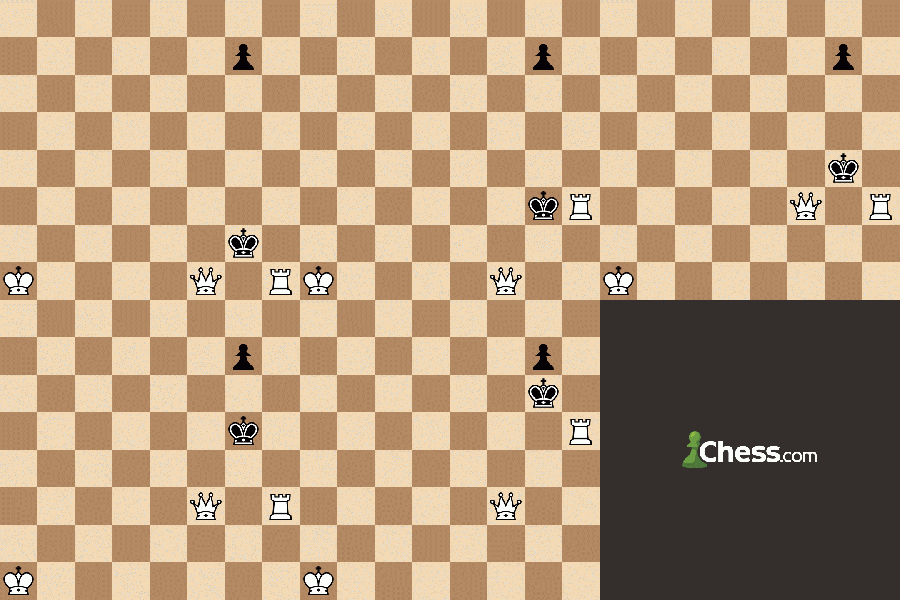
The same principle can be used to push the defending king towards the edge of the board if there is no piece to restrict its movement, as shown in the below diagram from the Durin vs Bross game from 1958.
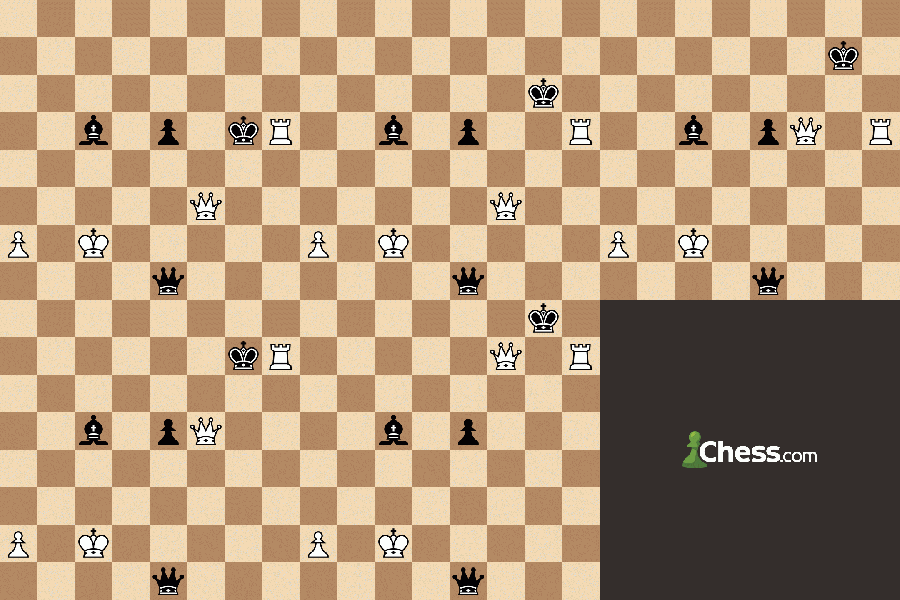
4. Killbox checkmate.
The second checkmate pattern involving the RailRoad technique (sliding the queen and rook on the sides of the king, similar to the train wheels on the rail roads) is the Killbox checkmate. This pattern takes its name from the powerful work of the queen and the rook to create the so-called ‘kill box’, trapping and checkmating the defending king. As opposed to the above Triangle mate, this time the rook delivers the final blow to the opponent.
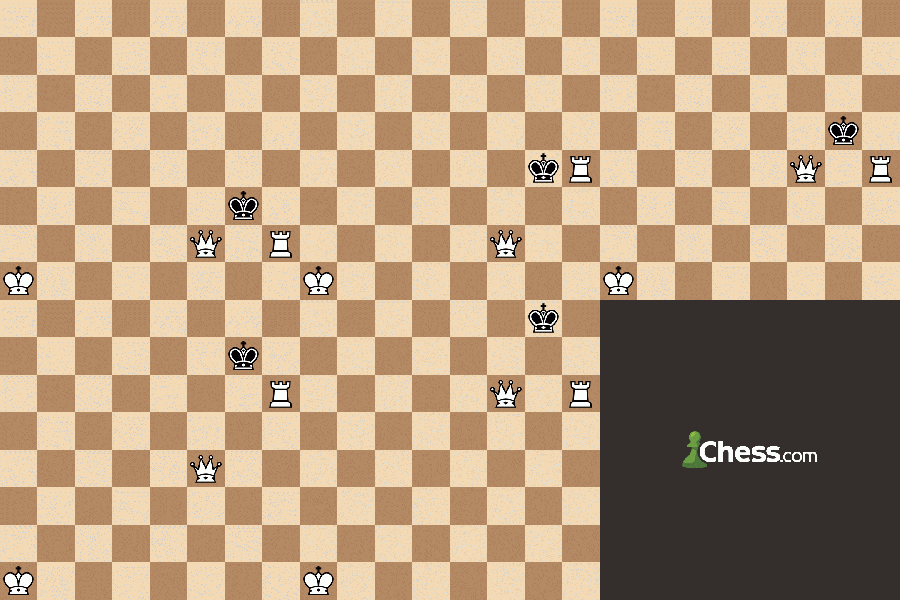
In the Geller vs Kogan game from 1946, White utilises the above checkmating idea in combination with a rook sacrifice. After Black accepts the sacrifice, Geller creates the “Kill box” and finishes off his opponent.

5. Legal’s checkmate.
Legal’s checkmate is a beautiful checkmating pattern which arises from an opening trap involving queen sacrifice. Usually played by White, it is named after the French player Sire de Légal who allegedly played the trap in 1750 against Saint Brie in a game at rook’s odds. Nowadays, the opening trap is commonly encountered, especially at amateur levels, and it usually occurs with the following line:
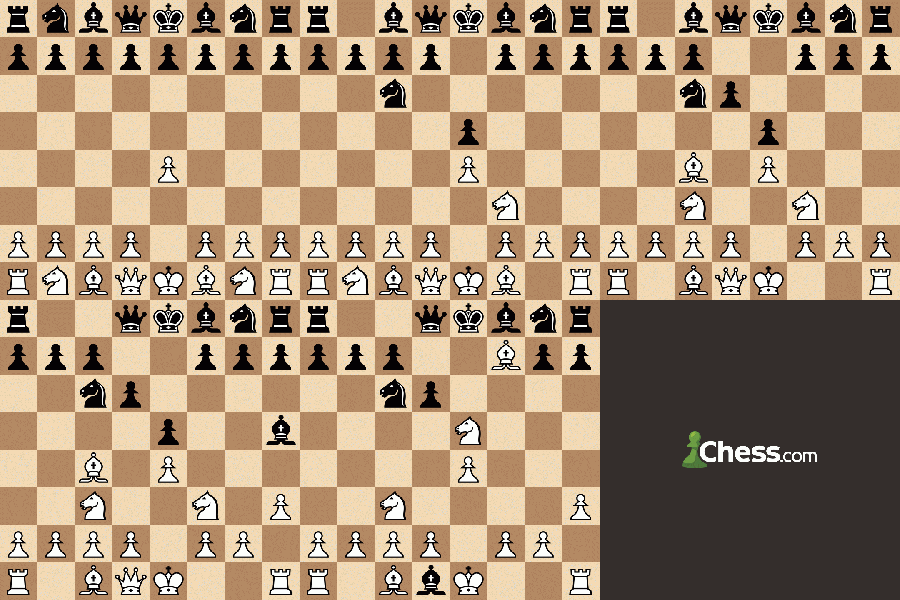
Although it is commonly played by White, Black can also use similar concept and deliver checkmate, albeit with a bishop as opposed to the knight. The trap usually arises from the Petrov’s defense and the checkmate is acheved in the following manner:

Involving a queen sacrifice and checkmating patterns with minor pieces, the Legal checkmate is a compulsory pattern to know especially for players at amateur and club level.
 Anstey Chess Club